





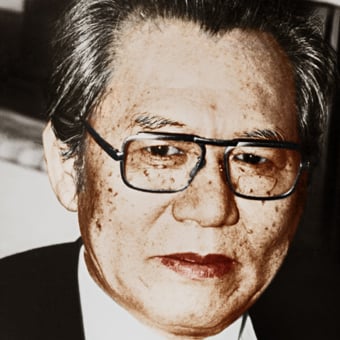
Isang Yun
Isang Yun verbindet in seiner Musik aufs glücklichste fernöstliche und abendländische Elemente * studierte in Japan und Korea * war im Widerstand gegen die japanische Besetzung Koreas aktiv, 1943 in politischer Haft * arbeitete nach dem Krieg als Dozent an der Universität von Seoul * studierte Komposition in Paris (1956) sowie bei Boris Blacher und Josef Rufer in Berlin * ließ sich in Deutschland nieder * Durchbruch als Komponist mit der Uraufführung des Orchesterwerks Réak in Donaueschingen 1966 * 1967 vom koreanischen Geheimdienst nach Seoul verschleppt, gefoltert und mit dem Tode bedroht * komponierte auf dem Boden seiner Haftzelle die Oper Die Witwe des Schmetterlings * nach diplomatischem Druck auf Betreiben der internationalen Musikwelt Freilassung und Rückkehr nach Deutschland * Isang Yun komponierte und lehrte in Hannover und an der Berliner Hochschule der Künste * konzentrierte sich in den letzten 20 Lebensjahren auf die Gattung des Konzerts und schrieb 5 Symphonien * beschäftigte sich in seinen Werken mit ästhetischen und philosophischen Fragen mit Bezug zur traditionellen Musik Asiens, zum chinesischen Taoismus und zu kompositorischen Verfahren der westlichen Avantgarde * humanitäre Prägung seiner Musik * zu seinen Interpreten zählen Heinz und Ursula Holliger, Siegfried Palm, Dietrich Fischer-Dieskau
Werkauswahl Isang Yun:
Pièce concertante (1976) für Kammerensemble
Muak (1978) Tanzfantasie für Orchester
Pezzo fantasioso (1988) für zwei Instrumente mit Baßinstrument ad lib.
Konzert für Oboe und Orchester (1990)
"Komponieren bedeutet für mich, Geheimnisse zu suchen und zu finden, ein Land des Experiments. Seit Anfang der sechziger Jahre bis heute bin ich nie... auf der Stelle geblieben, immer habe ich weiter und weiter gesucht. Mehr und mehr beschränke ich mich nun auf das Substantielle, um mehr Frieden, mehr Güte, mehr Einheit und Wärme in diese Welt zu tragen." – Isang Yun