





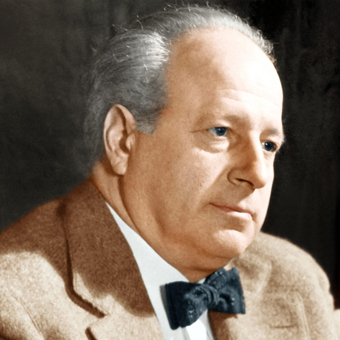
Walter Piston
Walter Piston studied first as an art draughtsman, then music at Harvard University and with Nadia Boulanger and Paul Dukas in Paris * On return to USA in 1926, forged friendship with Koussevitzky and started association with Boston Symphony Orchestra who premiered 11 of his works * His early music is predominantly neo-classical, showing the Parisian influence of Stravinsky and the late works of Fauré and Roussel * In his last decades his works also explore more complex harmonies and aspects of serialism within a tonal context * Output dominated by orchestral and instrumental works * Symphony No.3 was awarded the Pulitzer Prize in 1948 * Also revered as a scholar and teacher, he taught at Harvard between 1926 and 1960 * His pupils included Carter, Bernstein and Fine * Influential text books included Harmony (1941), Counterpoint (1947) and Orchestration (1955)
Works by Walter Piston include:
Violin Concerto No.1 (1939)
Sinfonietta (1941) for chamber orchestra
Symphony No.3 (1947)
Toccata (1948) for orchestra
"A consummate craftsman.. his writing is everywhere graced by a consistently superior brand of refinement, transparency and unerring good taste." — Gramophone