






Béla Bartók Timeline
Bartók and World Timelines
A year by year alignment of Béla Bartók's life with events in the wider world
by Malcolm Gillies
Bartok life and works
World events
Born on 25 March in Nagyszentmiklós, Hungary (now Sînnicolau Mare, Romania), son of an agricultural school headmaster and a teacher, both amateur musicians
Picasso, Pope John XXIII, Atatürk born;
Mussorgsky, Vieuxtemps die;
Brahms Tragic Overture,
Bruckner Symphony No.6;
Tsar Alexander II (Russia) assassinated
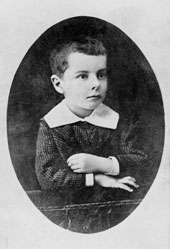
Portrait as a young boy (1886)
Stravinsky, Kodály, Szymanowski, Grainger born;
Premiere of Wagner’s Parsifal in Bayreuth;
Triple Alliance formed between Germany, Austria-Hungary and Italy;
Berlin Philharmonic Orchestra founded
Casella, Webern born; Wagner dies;
Brahms Symphony No.3, Delibes Lakmé;
Secret alliance formed between Austria-Hungary and Romania;
First run of the Orient Express
Receives his first musical instrument, a drum
Smetana dies;
Bruckner Te Deum;
Opening of the Budapest Opera House;
Greenwich meridian established as prime international meridian
Berg, Klemperer, D.H. Lawrence born;
Franck Symphonic Variations,
Sullivan The Mikado;
Serbian invasion of Bulgaria leading to Peace of Bucharest;
Nietzsche Also sprach Zarathustra
Begins piano lessons with his mother
Kokoschka born; Liszt dies;
Saint-Saëns Carnival of the Animals;
Manufacture of first motor car by Daimler;
Krafft-Ebing Psychopathia Sexualis
Nadia Boulanger, Chagall, Chiang Kai-schek born;
Borodin dies;
Verdi Otello;
Hertz produces radio waves;
Sardou, La Tosca
His father dies; the family moves frequently in the following six years as Bartók’s mother seeks teaching work in provincial Hungarian schools
T.S. Eliot, T.E. Lawrence born;
Alkan dies;
Mahler Symphony No.1, R. Strauss Don Juan, Tchaikovsky Symphony No.5;
Wilhelm II becomes German Kaiser;
Van Gogh Sunflowers
Hitler, Cocteau born;
Crown Prince Rudolf (Austria-Hungary) commits suicide;
R. Strauss Tod und Verklärung;
Paris International Exhibition;
Eiffel Tower completed
First compositions, starting with a waltz
Ho Chi Minh, Eisenhower, de Gaulle born;
Franck, Van Gogh die;
Mascagni Cavalleria Rusticana, Satie Trois Gnossiènnes;
Bismarck dismissed as German Chancellor;
Start of rapid industrial expansion in Hungary (to 1906)
Bliss, Prokofieff born;
Delibes dies;
Brahms Clarinet Quintet;
Pan-German League founded;
Pope Leo XIII’s encyclical Rerum novarum on working conditions
First public performance as a pianist, in Nagyszentmiklós, including his work The Course of the Danube
Honegger, Milhaud, Nijinsky born;
Tennyson, Whitman die;
Leoncavallo I Pagliacci;
Major earthquake in California;
Toulouse-Lautrec At the Moulin Rouge
Mao Tse-tung born;
Tchaikovsky, Gounod, Ferenc Erkel die;
Tchaikovsky ‘Pathétique’ Symphony, Puccini Manon Lescaut, Verdi Falstaff;
Judson invents zip fastener;
Wilde Salome
The Bartók family settles in Pozsony, Hungary (now Bratislava, Slovakia), allowing for his more orderly musical and general education
Khrushchev born;
Lajos Kossuth dies;
Debussy Prélude à l’après-midi d’un faune, Mahler ‘Resurrection’ Symphony;
Dreyfus trial in Paris
Succeeds Erno (Ernst) Dohnányi as his school’s organist
Hindemith born;
Pasteur dies;
Dvorák Cello Concerto in B minor;
Marconi transmits message by wireless;
Röntgen discovers X-rays;
first moving pictures
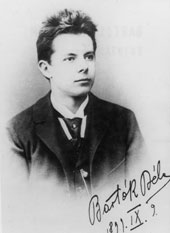
Portrait aged 18 (1899)
Bruckner, Verlaine die;
R. Strauss Also sprach Zarathustra, Puccini La Bohème;
First modern Olympic Games held in Athens;
Celebrations of the Hungarian millennium
Brahms dies;
Dukas The Sorcerer’s Apprentice;
Second Colonial Conference, London;
Pissarro Boulevard des Italiens
Performs his own piano sonata and parts of a piano quartet; visits Vienna, where he is offered a scholarship at the Conservatory
Hemingway born;
Mallarmé, Bismarck die;
R. Strauss Ein Heldenleben;
Empress Elizabeth (Austria-Hungary) murdered in Geneva;
Zeppelin invents airship
Commences studies in piano and composition at the Academy of Music in Budapest; serious lung problems emerge
Poulenc born;
Schoenberg Verklärte Nacht, Elgar Enigma Variations;
Aspirin is invented;
Monet starts Water Lilies paintings (to 1926)
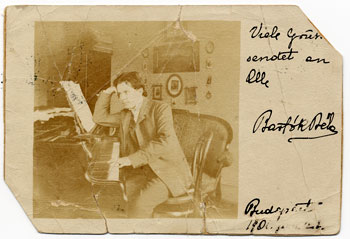
card sent from Budapest (1901)
Weill, Krenek, Copland born;
Sullivan, Nietzsche, Wilde die;
Puccini Tosca, Sibelius Finlandia, Mahler Symphony No.4;
Planck details quantum theory;
Chekhov Uncle Vanya
Gains first major success as a pianist in Budapest playing Liszt’s Piano Sonata; his interest in the works of Liszt and Wagner grows
Disney born;
Verdi, Queen Victoria die;
Ravel Jeux d’eau, Rachmaninoff Piano Concerto No.2, Dohnányi Symphony No.1;
Start of defence appropriation crisis in Hungarian parliament;
Mann Buddenbrooks
Hears Strauss’s Also sprach Zarathustra, which renews compositional inspiration
Walton, Khomeini born;
Zola, Rhodes die;
Debussy Pelléas et Mélisande, Delius Appalachia;
Renewal of Triple Alliance between Germany, Austria-Hungary and Italy;
Bayliss and Starling discover hormones
Performs Strauss’s Ein Heldenleben in his own piano transcription in Vienna, and performs in Berlin; presents his first public solo recital, in Nagyszentmiklós.
Wolf, Pissarro, Gauguin die;
Sibelius Violin Concerto, Schoenberg Pelleas und Melisande;
First controlled aeroplane flight by Wright brothers;
Hofmannsthal Elektra
His symphonic poem Kossuth (1903) is performed in Budapest and Manchester; composes op.1 Rhapsody and op.2 Scherzo; his interest in folk music is first aroused
Dvorák, Chekhov, Mór Jókai die;
Janácek Jenufa, Puccini Madama Butterfly;
Establishment of Entente cordiale between France and Britain;
Barrie Peter Pan
Competes unsuccessfully, as pianist and as composer, in the Rubinstein Competition in Paris; starts folk-music collaboration with Zoltán Kodály; composes his orchestral Suite No.1 and the first three movements of Suite No.2.
Tippett, C. Lambert born;
Debussy La Mer, R. Strauss Salome, Lehár The Merry Widow;
Abortive revolution in Russia;
Einstein enunciates his first theory of relativity
Tours Spain and Portugal as an accompanist; with Kodály publishes first Hungarian folksong settings; starts annual expeditions collecting folk music using an Edison phonograph
Shostakovich born;
Cézanne, Ibsen die;
Schoenberg Chamber Symphony No.1, Kodály Summer Evening;
Stolypin introduces agrarian reforms in Russia;
San Francisco earthquake
Appointed to the piano staff of the Budapest Academy of Music (to 1934); his interest in the works of Debussy and Reger is aroused; completes his Suite No.2
Auden born;
Grieg, Joachim die;
Triple Entente formed between Britain, France and Russia;
Lumière invents colour photography;
Picasso and Braque pioneer Cubism;
Kokoschka Murderer, Hope of Women
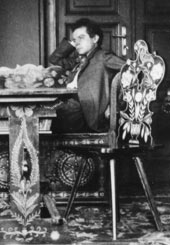
First folk-music article and first of many instructive editions of piano classics are published in Budapest; starts to investigate Romanian folk music; completes his Violin Concerto No.1 (op.posth.) and composes many piano pieces, including Fourteen Bagatelles
Messiaen, Karajan born;
MacDowell, Rimsky-Korsakov die;
Schoenberg first atonal works, Ives The Unanswered Question, R. Strauss Elektra, Stravinsky Fireworks, Ravel Rapsodie espagnole;
Austria annexes Bosnia and Herzegovina;
Endre Ady Blood and Gold poems
Marries Márta Ziegler (1893-1967); completes his String Quartet No.1 and a variety of short piano pieces
Rachmaninoff Piano Concerto No.3, Mahler Symphony No.9, Schoenberg Erwartung, Kodály String Quartet No.1;
Peary reaches the North Pole;
Diaghilev’s Russian Ballet starts its Parisian seasons
A Hungarian festival in Paris features his works; composes Two Pictures; his elder son, Béla, is born
Balakirev, Tolstoy, Twain die;
Elgar Violin Concerto, Stravinsky Firebird, Berg String Quartet;
Population of Hungary 18.2 million, of which 55 per cent are native Hungarian
speakers;
120,000 emigrate from Hungary to the United States in this year
With friends founds the New Hungarian Musical Society (which soon fails); composes the opera Duke Bluebeard’s Castle and Allegro Barbaro
Menotti, R. Reagan born;
Mahler dies;
Stravinsky Petrushka, Elgar Symphony No.2;
Chinese Revolution, leading to republic under Sun Yat-sen;
Amundsen reaches South Pole
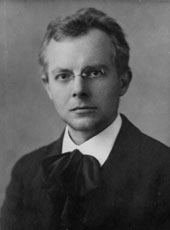
Portrait (1912)
Starts to withdraw from Hungarian musical life, although continues to teach at the Academy; composes his Four Orchestral Pieces (orchestrated in 1921)
Cage, János Kádár born;
Massenet, R. Scott die;
Schoenberg Pierrot Lunaire, Debussy Jeux, Ravel Daphnis et Chloé;
Sinking of the Titanic;
Bernhardt stars in the silent film Queen Elizabeth
Collects folk music in French north Africa (Algeria); his first ethnomusicological book, about Romanian folk music from Bihar county, appears in Bucharest
Britten, Lutoslawski, Camus, R. Nixon born;
Stravinsky The Rite of Spring, Skryabin Prometheus;
Second Balkan War;
Proust Du côté de chez Swann
War breaks out; he is rejected for military service; starts to compose his ballet The Wooden Prince
Reger Variations and Fugue on a Theme of Mozart, Dohnányi Variations on a Nursery Song;
Opening of the Panama Canal;
Outbreak of First World War;
Russian attempted invasion of Hungary
Joyce Dubliners
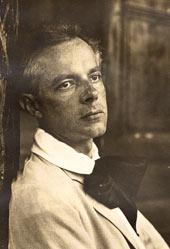
Collects folk music during several visits to Slovak regions; composes many piano works, including Sonatina, Romanian Folk Dances and Romanian Christmas Songs
A. Miller born;
Skryabin dies;
R. Strauss An Alpine Symphony, Debussy En blanc et noir;
Einstein’s general theory of relativity enunciated;
Picasso Harlequin
Composes his Suite for piano and two sets of songs (BB71, 72), as well as several Slovak folksong settings
Menuhin, Mitterand born;
Reger, Granados die;
Stravinsky Renard, Holst The Planets, Szymanowski ‘Song of the Night’ Symphony;
Franz Joseph I (Austria-Hungary) dies;
Dadaist anti-art movement in Zürich
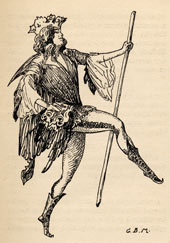
Completion and well-received Budapest première of The Wooden Prince; completes String Quartet No.2
J.F. Kennedy born;
Rodin dies;
Prokofieff ‘Classical’ Symphony, Satie Parade; Pfitzner Palestrina;
United States joins war;
Armistice declared on Eastern Front;
Russian Revolution;
Jung The Unconscious
Budapest première of Duke Bluebeard’s Castle; makes final folk-music collection in Hungary; contracts Spanish influenza; concludes negotiations with Universal Edition, Vienna, to publish his compositions; completes Fifteen Hungarian Peasant Songs and composes Three Studies, both for solo piano
Bernstein, Billy Graham, Mandela born;
Debussy dies;
Stravinsky L’histoire du soldat;
Allies sign separate armistices with Germany and Austria-Hungary;
Global influenza epidemics (into 1919)
Re-emerges into Budapest’s concert life; accepts a position with the short-lived Communist Republic of Councils; initial completion of his pantomime The Miraculous Mandarin (orchestrated in 1924)
Renoir, Ady die;
Falla The Three-Cornered Hat, Prokofieff The Love for Three Oranges;
Communist revolts in Berlin, Bavaria, Hungary;
Versailles Peace Conference;
Nazi Party (Germany) and Fascist Party (Italy) formed
Starts to re-establish Western European contacts and seriously thinks of emigrating; writes of approaching an atonal goal in recent compositions; composes his Improvisations for piano
Stravinsky Pulcinella, Hába String Quartet No.2, using quarter tones;
Formation of the ‘Group of Six’ composers in France;
Hungarian regency of Miklós Horthy
commences (to 1944);
Treaty of Trianon reduces Hungarian land area by two-thirds
Writes many articles for foreign journals; completes his study, with Kodály, of Transylvanian folksongs, and contracts to publish his Slovak collection; composes his Violin Sonata No.1, inspired by violinist Jelly d’Arányi
Caruso, Humperdinck, Saint-Saëns die;
Honegger King David, Webern Trakl Songs;
Schoenberg develops serial techniques;
Munch The Kiss
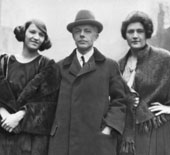
with the D'Aranyi sisters (1923)
Tours Romania, Britain, France, and Germany, with great success; participates in founding the International Society for Contemporary Music (ISCM) in Salzburg; composes his Violin Sonata No.2
Xenakis born;
Proust, A. Bell die;
Walton Façade;
Discovery of the tomb of Tutankhamun in Egypt;
Dezsö Kosztolányi The Bloody Poet
Divorces, and marries Ditta Pásztory (1903-82); tours further as composer-pianist in Western Europe; composes orchestral Dance Suite, in a more accessible style
Callas, Ligeti born;
Stravinsky Les noces, Kodály Psalmus Hungaricus, Zemlinsky Lyric Symphony, Honegger Pacific 231;
Union of Soviet Socialist Republics established
His study of Hungarian folk music appears in Budapest; composes Village Scenes; his younger son, Peter, is born
Nono, George Bush Snr born;
Busoni, Fauré, Puccini, Lenin die;
Gershwin Rhapsody in Blue, Respighi The Pines of Rome, Ravel Tzigane, Dohnányi Ruralia Hungarica;
League of Nations reorganizes central European finances
Continues with European concert tours; his Dance Suite gains international popularity
Berio, Boulez, Thatcher born;
Satie, Sun Yat-sen die;
Shostakovich Symphony No.1, Nielsen Symphony No.6;
Premiere of Berg’s Wozzeck (Berlin) and Busoni’s Doctor Faust (Dresden);
Hitler Mein Kampf Volume I
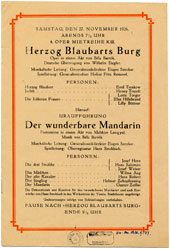
Makes first radio appearances as a pianist; attends controversial première of The Miraculous Mandarin in Cologne; composes the Piano Sonata, Out of Doors, Nine Little Piano Pieces, and Piano Concerto No.1, which reflect Baroque interests; later comments that around this year he moved from a Beethovenian to a more Bachian creative aesthetic
Henze, Kurtág, Elizabeth II (Britain) born;
Monet dies;
Berg Lyric Suite, Krenek Jonny spielt auf, Kodály Háry János Suite;
Hirohito becomes Emperor of Japan (to 1989);
Milne Winnie the Pooh
Undertakes his first tour of the United States (into 1928), to mixed reception; completes his String Quartet No.3, gaining equal first prize (with Casella) in a Philadelphia competition
Benedict XVI born; Stravinsky Oedipus Rex, Varèse Arcana, Lambert The Rio Grande;
Allies relinquish military control of Hungary;
First talking films released
Makes first commercial gramophone recordings of his works; composes two Violin Rhapsodies No.1 and No.2 and String Quartet No.4
Stockhausen, Chomsky, Kubrick born;
Janácek, T. Hardy die;
Weill Threepenny Opera, Webern Symphony for small orchestra;
Kingsford-Smith flies across the Pacific;
German airship crosses the Atlantic
Tours the Soviet Union; composes Twenty Hungarian Folksongs, for voice and piano
Crumb, Pousseur, Previn born;
Diaghilev, Hofmannsthal die;
Walton Viola Concerto, Schoenberg Von heute auf morgen;
Stock market crash in New York, leading to Depression;
Second Surrealist Manifesto
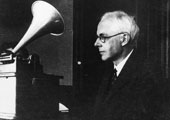
Decides no longer to perform his own works in Budapest (to 1936); the first full-length study of his works, by Edwin von der Nüll, appears in Halle; composes Cantata Profana, and Hungarian Folksongs for mixed chorus
Takemitsu, W. Buffett born;
D.H. Lawrence dies;
Stravinsky Symphony of Psalms;
Last Allied troops leave Germany;
Population of Budapest reaches one million
Joins the literature and arts committee of the League of Nations’ Commission for Intellectual Cooperation; completes his Piano Concerto No.2
Gorbachev born;
Melba, Nielsen, Edison die;
Ravel two piano concertos;
Revolution in Spain;
Japanese invasion of Manchuria;
Empire State Building completed
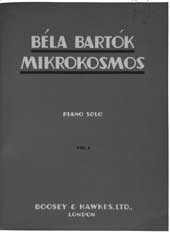
Attends a conference on Arabic music in Cairo; composes Székely Folksongs for male chorus; completes a set of violin duos for students, and starts to write for his Mikrokosmos collection of graded piano pieces
Malipiero Violin Concerto No.1, Shostakovich Lady Macbeth of Mtsensk, Schoenberg Moses und Aron;
Neutrons and Vitamin D discovered
Premières his Piano Concerto No.2 in Frankfurt am Main (last appearance in Germany)
Penderecki born; S. George dies;
Varèse Ionisation, Kodály Dances of Galánta, Prokofieff Lieutenant Kijé;
Roosevelt becomes US President (to 1945);
Hitler becomes German Chancellor (to 1945);
Orwell Down and Out in Paris and London
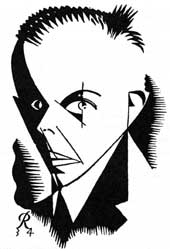
Is released from teaching at the Budapest Academy of Music and joins the folk-music section of the Hungarian Academy of Sciences (to 1940); composes his String Quartet No.5, to a commission from the Library of Congress in Washington
Birtwistle, Gagarin born;
Delius, Elgar, Holst, Hindenburg, Dollfuss die;
Rachmaninoff Rhapsody on a Theme of Paganini, Stravinsky Perséphone;
Hitler becomes German Führer;
Russian Communist Party purges begin
Refuses award of the Hungarian Greguss Prize for his orchestral Suite No.1 (1905); publishes his study of Romanian Christmas Songs; composes From Olden Times for male chorus and most of Twenty-seven Choruses for children’s and women’s choruses
E. Presley born;
Berg, Dukas, T.E. Lawrence die;
Hindemith Mathis der Maler, Berg Violin Concerto, Gershwin Porgy and Bess;
Beginning of the ‘swing’ period;
Germany repudiates aspects of Versailles Treaty;
Italy invades Abyssinia
Presents his inaugural address, about Liszt’s music, before the Hungarian Academy of Sciences; visits Turkey to perform, collect folk music and advise on music education; composes the Music for Strings, Percussion, and Celesta, to a commission from Paul Sacher
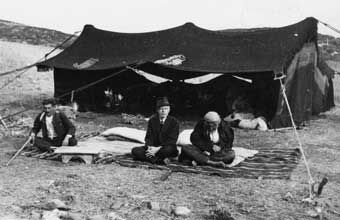
Field trip to Turkey (1936)
S. Reich born;
Glazunov, Kipling die;
Orff Carmina Burana;
First commercial television broadcasts, in Britain;
Italy, Austria and Hungary form Power Pact;
German-Japanese agreement
Forbids relay broadcasts of his concerts over German or Italian radio; composes the Sonata for Two Pianos and Percussion
P. Glass, S. Hussein born;
Gershwin, Ravel, Szymanowski, Marconi die;
Bliss Checkmate, Ginastera Danzas Argentinas, Shostakovich Symphony No.5;
Exhibition of ‘degenerate art’ in Munich;
Picasso Guernica
Starts negotiations with Boosey & Hawkes to take over publication of his works from Universal Edition, Vienna; starts to send his most valuable manuscripts out of Hungary; performs for the last time in Britain; composes Contrasts, to a commission from Benny Goodman, and completes the Violin Concerto No.2
Chaliapin, Atatürk, Capek die;
Copland Billy the Kid, Stravinsky ‘Dumbarton Oaks’ Concerto;
Austria annexed by Germany;
First Vienna Award increases Hungary’s land area;
First Jewish Law in Hungary;
Huizinga Homo Ludens
Makes final concert tours of France, Switzerland, and Italy; formally contracts with Boosey & Hawkes; his mother dies, and he starts serious planning to leave Hungary; completes his six-volume Mikrokosmos collection; composes Divertimento and String Quartet No.6
Freud, Yeats die;
Kodály ‘Peacock’ Variations, Shostakovich Symphony No.6;
Outbreak of Second World War;
German and Russian invasions of Poland;
Hungary declares itself non-belligerent, although affiliated with Axis powers
Tours the United States and later in the year settles in New York; receives an honorary doctorate from Columbia University; arranges his Sonata for Two Pianos and Percussion as a concerto
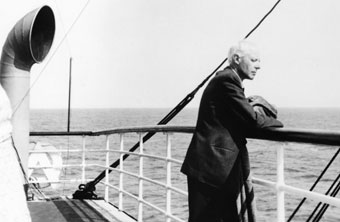
aboard USS Excalibur, emigrating to America (1940)
J. Lennon born;
N. Chamberlain, Trotsky die;
Stravinsky Symphony in C, Webern Variations for orchestra, Barber Violin Concerto;
Second Vienna Award increases Hungary’s land area by a further 52 per cent;
Disney Fantasia
Takes up a research fellowship in ethnomusicology at Columbia University; gives occasional concerts, often with his wife; arranges his Suite No.2 for two pianos
Dylan, Kim Jong-Il born;
Paderewski, V. Wolff, Baden-Powell die;
Messiaen Quatuor pour le fin du temps, Tippett A Child of Our Time;
US joins the war;
Hungary actively joins war on Axis side
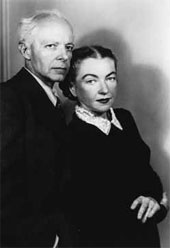
Experiences depression at dwindling concert, lecturing, and publishing opportunities, and onset of illness; puts most of his energies into his ethnomusicological work
M. Ali born;
Zemlinsky, Fokine die;
R. Strauss Capriccio, Britten Hymn to Saint Cecilia, Hindemith Ludus tonalis;
Magnetic tape is invented;
Camus L’Étranger
Makes final concert appearances, with his wife, performing the Concerto for Two Pianos, Percussion and Orchestra in New York; takes up visiting professorship at Harvard University but soon has to relinquish his responsibilities because of ill health; completes his study of Turkish folk music (published in1976); composes Concerto for Orchestra, to a commission from the Koussevitzky Music Foundation
Ferneyhough, Jagger born;
Rachmaninoff dies;
Prokofieff War and Peace;
Rodgers and Hammerstein Oklahoma!;
Mussolini overthrown, Italy surrenders;
Penicillin first successfully used to treat disease
Completes his study of Serbo-Croatian folksongs(published in 1951); moves to his final New York apartment after many months of recuperation at health resorts; composes and hears Menuhin première his Sonata for Solo Violin in New York; attends première in Boston of Concerto for Orchestra, under Koussevitzky
Kandinsky, Munch, Rommel die;
Copland Appalachian Spring, Messiaen Vingt regards sur l’enfant Jésus, Stravinsky Babel;
D-Day initiates Allied invasion of Europe;
siege of Budapest by Russians commences
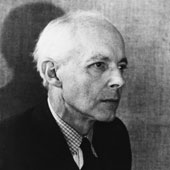
Completes his monumental study of Romanian folkmusic (published in 1967-75); composes the Piano Concerto No.3; sketches the Viola Concerto (commissioned by William Primrose) and some ideas for his next string quartet; dies of leukaemia in New York on 26 September
Mascagni, Webern, Hitler, Roosevelt, Keynes, Mussolini die;
Britten Peter Grimes, R. Strauss Metamorphosen, Kodály Missa Brevis;
War ends in Europe, then in Pacific;
foundation of the United Nations;
Orwell Animal Farm
Copyright images courtesy of Peter Bartók and the Bartók Archive Budapest -
visit their website for a Virtual Exhibition on the composer.
Back to Bartók Connections website