






Igor Stravinsky Timeline
A year by year alignment of Stravinsky's life and works
Biographical information by Stephen Walsh
The chronological list of works indicates the publisher of each work. For those published by Boosey & Hawkes, links are provided to useful information including scorings, durations and repertoire notes.
Born 5 June (17 June New Style) at Oranienbaum, on the gulf of Finland thirty miles from St. Petersburg, where his father, a leading operatic bass at the Maryinsky Theatre, has rented a dacha.
Meets his cousin and future wife, Catherine Nossenko, at her father’s estate at Ustilug, western Ukraine.
Goes to school (2nd St. Petersburg Gymnasium), having previously been taught - like his three brothers - by tutors in the family apartment. First piano lessons. Attends 50th anniversary performance of Glinka’s Ruslan and Lyudmila at Maryinsky, probably the first opera he has seen.
First trip abroad, with his parents to Bad Homburg, near Frankfurt.
Death of his older brother Roman
Tarantella for piano ms
Begins law studies at St. Petersburg University and, privately, music theory lessons with Akimenko, who is soon replaced by Kalafaty.
Visits Rimsky-Korsakov in Heidelberg and shows him his compositions. Death of his father from cancer.
Storm Cloud for voice and piano FM
Scherzo for piano FM
Starts his first large-scale work, a piano sonata, at his uncle’s Samara estate (Pavlovka). Informal work with Rimsky at his dacha at Krapachukha.
Conducts cantata for Rimsky’s 60th birthday at a party in the Rimsky flat.
Sonata in F sharp minor for piano FM
Cantata for mixed choir and piano (presumed lost)
Begins regular study with Rimsky
Marries Catherine Nossenko
Conductor and Tarantula for voice and piano (presumed lost)
First public performances: The Faun and the Shepherdess and part of the Symphony in E flat, at rehearsal concerts of the Petersburg Court Orchestra
Symphony in Eb op.1 for orchestra (1907 rev. 1914) For
Faun and Sheperdess op.2 for mezzo-soprano and orchestra Bel
Pastorale for soprano and piano Sch
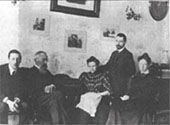
Death of Rimsky-Korsakov
Scherzo Fantastique op.3 for orchestra (1908 rev. 1930) Sch
Fireworks op.4 Fantasy for orchestra Sch
Four Studies op.7 for piano Jur
Serge Diaghilev hears premiere of Scherzo fantastique and a private performance of Fireworks; Stravinsky contributes Chopin orchestrations to Diaghilev’s Paris production of Les Sylphides.
Kobold (Grieg) orchestrated by the composer
First visit to Paris for the Ballets Russes premiere of The Firebird, where he meets Debussy, Ravel, and other notables. After its triumph, decides to winter in Switzerland (Clarens) and the south of France (Beaulieu).
The Firebird (L’Oiseau de feu) Ballet in two scenes Sch
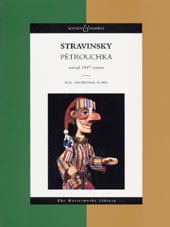
Completes Petrushka in Rome. Paris premiere of Petrushka with Nijinsky, designs by Benois. Summer at Ustilug, but winter again at Clarens, composing The Rite of Spring.
Burlesque in four scenes (1911 rev. 1947) BH
The King of the Stars (Zvezdoliki) for male chorus and orchestra (1911-12) For
First London Firebird. Attends Bayreuth Festival (Meistersinger and Parsifal). First visit to Venice, where he plays part of Rite to Diaghilev. Last St. Petersburg visit for fifty years. In Berlin with the Ballets Russes, meets Schoenberg and attends Pierrot Lunaire.
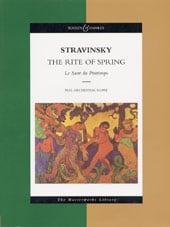
First visit to London. Near riot at Paris premiere of The Rite of Spring. Contracts typhoid from a bad oyster. Final summer at Ustilug.
Ballet in two parts (1913/47) BH
Khovanshchina (Mussorgsky) Orchestrations from the opera Br
Catherine’s tuberculosis erupts after the birth of fourth child. Completes Nightingale for Moscow Free Theatre, which disbands before the work can be staged. Conducting début (Montreux). Flying visit to Ustilug and Kiev before war breaks out. Works at Salvan and Clarens on Les Noces and Russian songs.
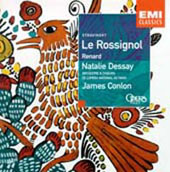
Lyric tale in three acts BH
Pribaoutki for medium voice and eight instruments Ch
Three Easy Pieces for piano duet Ch
First meetings with the Futurists in Rome and Milan. Meets C.F. Ramuz. Moves to Morges (Lausanne). More Russian songs, and starts Renard. Conducts Firebird in Geneva and Paris.
Four Russian Peasant Songs (Podblyudna) for female voices a cappella or with four horns (1914-17, rev 1954) Sch/Ch/Ma
Berceuses du chat for medium voice and three clarinets (1915-16) Ch
With Ballets Russes in Spain. Completes Renard.
Renard burlesque for two tenors, two basses and ensemble Ch
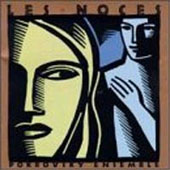
Scherzo fantastique staged in Paris as a ballet about bees. February revolution in Russia. Meets Picasso in Rome. Death of brother Gury in Romania. Completes first version of Les Noces. Bolshevik revolution finally cuts Stravinsky off from Russia.
Five Easy Pieces for piano duet Ch
Trois histoires pour enfants for voice and piano (1916-17) Ch
Song of the Volga Boatmen arranged for wind and percussion Ch
Canons for Two Horns (presumed lost)
Étude for pianola BH
Berceuse for voice and piano FF
Financial hardship. Collaborates with Ramuz on The Soldier’s Tale, but the flu epidemic prevents all but the Lausanne performance. War ends. His sister-in-law and family reach Morges and move in with the Stravinskys.
The Soldier’s Tale (Histoire du soldat) for three speakers, dancer and seven instrumentalists Ch
Ragtime for eleven instruments Ch
Three Pieces for clarinet solo Ch
Prologue to Boris Godunov (Mussorgsky) transcribed for piano BH
Four Russian Songs for voice and piano (1918-19) Ch
Piano-Rag-Music for piano Ch
Pulcinella staged in Paris. Moves from Switzerland, via Brittany, to Coco Chanel’s villa in Garches (Paris). Composes Symphonies of Wind Instruments. Paris revival of The Rite, with choreography by Massine.
Ballet in one act (1920 rev. 1965) BH
Row with Diaghilev over payments, but hardship eased by donations from America. Starts Pulcinella.
transcribed for unaccompanied violin BH
Concertino for string quartet Han
Meets and falls in love with Vera Sudeikina. Moves with family to Biarritz, but takes studio at Maison Pleyel (Paris), with whom he signs a contract to cut piano rolls of his works. In London for The Rite and premiere of Symphonies of Wind, and later for Diaghilev’s production of Tchaikovsky’s Sleeping Beauty. Begins Mavra.
Les Cinq doigts Easy pieces for piano Ch
Suite No.2 for chamber orchestra Ch
Vera separates from her husband. Diaghilev stages Renard and Mavra. Starts Octet. Spends autumn in Berlin and meets his mother off a Soviet boat at Stettin. In Berlin, meets Pierre Souvtchinsky and George Antheil. Visited in Paris by Mayakovsky.
Opera buffa in one act (1922 rev. 1947) BH
Les Noces completed and staged. With Vera to Weimar for Bauhaus Soldier’s Tale, meets Busoni, Kandinsky and (probably) Klee. Conducts Paris premiere of the Octet and, for the first time, a whole concert of his works.
Les Noces Russian dance scenes with song and music (1914-23) Ch
Trois histoires pour enfants (1915-17) transcribed for voice and orchestra Ch
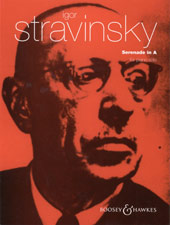
Publishes ‘Some ideas about my Octuor’. Completes and premieres Concerto for Piano and Wind Instruments. First concert tours, conducting in Belgium and Spain, and playing the concerto in Copenhagen, Warsaw, Holland, Germany, Switzerland and Marseille. Paris stage premiere of Soldier’s Tale. Moves with his family from Biarritz to Nice.
(1924 rev. 1950) BH
First US concert tour. Signs first recording contract (with Brunswick). Plays Sonata in Venice. Embarks on Oedipus Rex with Jean Cocteau. His niece Tanya from Leningrad spends a year with the family in Nice.
for piano BH
Suite No.1 for small orchestra Ch
Conducts Rite of Spring for the first time. Return to (Orthodox) communion. First journey by air (from Paris to Croydon).
or chorus a cappella (1926 rev. 1949) BH
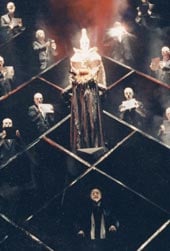
Oedipus Rex completed, and premiered (as an oratorio) by Diaghilev. Plays Concerto for Piano and Wind Instruments in London. Summer at Echarvines, on the Lac d’Annecy. Begins Apollo to a commission from Elizabeth Sprague Coolidge.
Opera-Oratorio in two acts (1927 rev. 1948) BH
Stage premieres of Oedipus Rex in Vienna, and in Berlin (under Klemperer, attended by the composer). Apollo staged in Washington and by Diaghilev in Paris (choreography by Balanchine). Records Petrushka and Firebird for Columbia, and composes The Fairy’s Kiss for Ida Rubinstein.
for string orchestra (1928 rev. 1947) BH
Composers and premieres Capriccio (under Ansermet in Paris). Death of Diaghilev. Records The Rite of Spring.
for piano and orchestra (1929 rev. 1949) BH
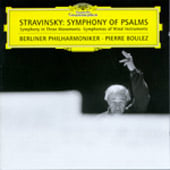
Composes Symphony of Psalms (first performances in Brussels and Boston). Summer at Charavines, near Grenoble. First meeting with the violinist Samuel Dushkin for whom he starts a concerto.
for chorus and orchestra (1930 rev. 1948) BH
Moves from Nice to Voreppe, near Grenoble. Conducts Violin Concerto with Dushkin in Berlin.
Concerto in D for violin and orchestra Sch
First concert tour in duo with Dushkin, for whom he composes the Duo concertant and various arrangements.
for violin and piano BH
Hitler becomes German Chancellor. Collaboration with André Gide on Persephone. Moves from Pleyel into a Paris apartment (rue Viète).
Dialogue Between Joy and Reason for two voices and keyboard (unfinished) ms
Persephone premiered in Paris. Takes French cititzenship. Moves with his whole family from Voreppe into a large Paris apartment in the Faubourg Saint-Honoré.
Melodrama in three parts (1934 rev. 1949) BH
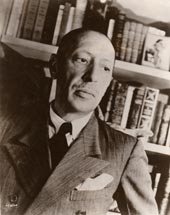
Second US tour (with Dushkin). Publication of first volume of autobiography (Chroniques de ma vie). Premieres (with his son Soulima) the Concerto for two pianos. Meets Mussolini in Rome. Marriage of his daughter Lyudmilla with Yury Mandelstam. Catherine, in the advanced stages of tuberculosis, spends much time in a sanatorium in Sancellemoz (Haute-Savoie).
Concerto for two solo pianos Sch
Unsuccessful candidacy for the Académie des Beaux-Arts. South American tour. Composes Jeu de cartes for Lincoln Kirstein’s American Ballet.
Jeu de cartes Ballet in three deals Sch
Third US tour, including premiere of Jeu de cartes in New York (with Balanchine). Much of the year is spent with his family either in Sancellemoz or at the nearby Château de Monthoux at Annemasse. Lyudmilla also ill with tuberculosis. Dispute with Ansermet over cuts to Jeu de cartes.
Petit Ramusianum Harmonique Three quatrains for voice(s) ms
Dumbarton Oaks concerto premiered in Washington under Boulanger. Stravinsky figures in Nazi exhibition of ‘Degenerate Music’ in Düsseldorf. Lyudmilla dies in Paris while Stravinsky is in Italy. Begins Symphony in C.
Concerto in Eb ‘Dumbarton Oaks’ for chamber orchestra Sch
Catherine dies in Paris. Stravinsky himself spends months at Sancellemoz, preparing his Harvard lectures with Roland-Manuel. Death of his mother. Leaves for New York just after outbreak of war. First set of Charles Eliot Norton lectures in Harvard, and concerts in several US cities.
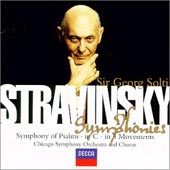
Vera arrives in the USA, and they marry in Bedford (Massachusetts). Completes Harvard lectures. Applies for US citizenship. Settles in Beverly Hills (Los Angeles). Symphony in C is finished and performed in Chicago, under the composer.
Symphony in C for orchestra Sch
Tango for piano Mer/Sch
Moves to West Hollywood, but tours US widely conducting his own music, including the new symphony. Death of his brother Yury in Leningrad.
Star-spangled banner for orchestra and mixed choir Mer
Bluebird pas de deux from The Sleeping Beauty (Tchaikovsky) transcribed for small orchestra Sch
Completes Danses concertantes, and works on a variety of occasional pieces, including what will become part of the Symphony in Three Movements
Danses concertantes for chamber orchestra Sch
Circus Polka for orchestra Sch
Four Norwegian Moods for orchestra Sch
Composes Ode in memory of Natalie Koussevitsky, and revises ‘Danse sacrale’ in The Rite of Spring. Works on film projects, none of which comes to fruition.
Ode Elegiac chant in three parts for orchestra Sch
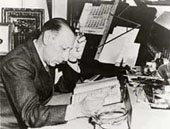
More occasional works, including Babel and the Scènes de Ballet. But also composes, on a new religious impulse, the 'Kyrie' and 'Gloria' of the Mass.
Babel Cantata for male chorus, male narrator and orchestra Sch
Sonata for two pianos BH*/Sch/ch
Elegy for unaccompanied viola (or violin) BH*/Sch/ch
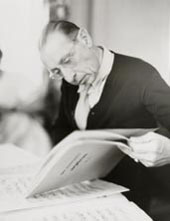
End of the war. Stravinsky completes Symphony in Three Movements for the New York Philharmonic Orchestra. Igor and Vera become US citizens.
Symphony in Three Movements for orchestra Sch
Concerts in Cuba and Mexico, as well as across the USA. Revises Petrushka and starts Orpheus for Kirstein’s Ballet Society. Visits Turner, Hogarth and Constable exhibition in Chicago.
Ballet in three scenes (1946-47) BH
Correspondence with the 23 year-old Robert Craft about the unpublished Symphonies of Wind Instruments, which Stavinsky is revising. Begins collaboration with W.H. Auden on The Rake’s Progress.
for two voices BH
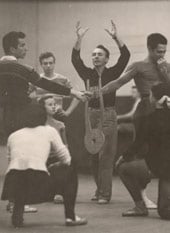
Completes Mass. First meeting with Craft. Orpheus premiered (New York).
for mixed chorus and double wind quintet BH
Dissociates himself from the Soviet peace delegation including Shostakovich. Craft moves in with the Stravinskys and becomes in effect the composer’s assistant and musical secretary.
US travel, both professional and leisure
Completes The Rake’s Progress. Returns to Europe for the first time since 1939 to conduct the premiere in Venice. Concerts in Germany and Italy. In Germany he hears the music of the European avant-garde, including Boulez.
(1910) transcribed for baritone and small orchestra BH
Encounters with chamber works by Schoenberg and Webern which Craft is rehearsing in Los Angeles. European tour. Takes part in the ‘Oeuvre du XXème siècle’ festival in Paris, at which he hears Berg’s Wozzeck and Boulez’s Structures, and conducts a tableau vivant staging of Oedipus Rex with Cocteau as Speaker and designer. Completes Cantata.
for soprano, tenor, female chorus and ensemble BH
Concertino for Twelve Instruments Han
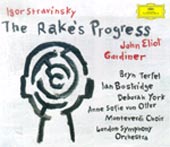
US premiere of The Rake at the New York Met. Completes Septet. Meets Dylan Thomas with a view to an operatic collaboration, but Thomas dies six months later. First notations for Agon.
for mixed ensemble (1936-37 rev. 1953) BH
Tango (1940) transcribed for chamber orchestra Mer/Sch
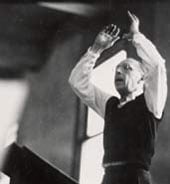
Interrupts Agon to compose In Memoriam Dylan Thomas, which Craft conducts at the Monday Evening Concerts in Los Angeles. Third European tour. Receives gold medal of the Royal Philharmonic Society in London.
for tenor, string quartet and four trombones BH
Four Songs for voice, flute, harp and guitar Ch
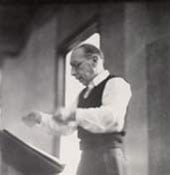
Starts Canticum Sacrum for the Venice Biennale.
for tenor, baritone, chorus and orchestra BH
Resumes Agon. Conducts Canticum Sacrum and Vom Himmel hoch in St. Mark’s, Venice, by dispensation of Cardinal Roncalli, the future Pope John XXIII. In Berlin, suffers a stroke while conducting the Symphony in C.
(JS Bach) transcribed for mixed chorus and orchestra BH
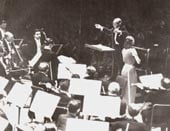
Visit of Boulez to Los Angeles. Agon completed. European tour. Starts work on a new Biennale commission, Threni, in Venice, and conducts Agon at the Domaine Musical in Paris. Visits Dartington Summer School. Early versions of Conversations with Igor Stravinsky (Craft).
Ballet for twelve dancers BH
Conducts Threni in the Scuola di San Rocco, Venice.
for six solo voices, mixed chorus and orchestra BH
Boulez conducts Threni in Munich. Stravinsky tours Japan, completes Movements, and conducts at the Edinburgh Festival.
for piano and orchestra BH
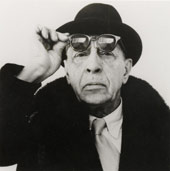
Tours of South America and Italy, during which Stravinsky is carried out of the Hotel Bauer-Grünwald in a Venice flood. Writes Monumentum pro Gesualdo and starts A Sermon, a Narrative and a Prayer for Paul Sacher.
Three madrigals by Gesualdo, recomposed for instruments BH
Cantata for alto and tenor soli, speaker, chorus and orchestra (1960-61) BH
Invited to the USSR in the following year. The Flood commissioned for CBS television. Stravinsky’s most extensive world tour, covering Europe, eastern Asia, Australia and New Zealand.
Dines with Kennedy at the White House. Completes The Flood (which goes out on TV with interruptions for shampoo ads). Tours South Africa, then Europe, where he spends his 80th birthday in Hamburg. After a brief return to New York, embarks on tour of Israel and USSR, his first return since 1914.
Musical Play for soloists, chorus and orchestra BH
Eight Instrumental Miniatures for fifteen players Ch
Completes Abraham and Isaac. First staging of The Flood (Hamburg). Attends (part of) Monteux’s 50th anniversary Rite of Spring in the Albert Hall (London). Begins orchestral Variations. Assassination of Kennedy.
Sacred ballad for baritone and chamber Orchestra BH
Canzonetta (Sibelius) transcribed for eight instruments Br
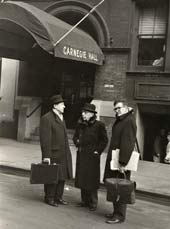
Moves to a larger, more accessible house in the same West Hollywood street. Premiere of Abraham and Isaac in Jerusalem, under Craft. Finishes Elegy for JFK and the Variations.
for baritone or mezzo-soprano and three clarinets BH
Variations Aldous Huxley in Memoriam for orchestra BH
Introitus in memory of T.S. Eliot. Begins Requiem Canticles for Princeton University. Continues punishing conducting schudule in his 83rd year, including a European tour. CBS film by Rolf Liebermann.
for male chorus and ensemble BH
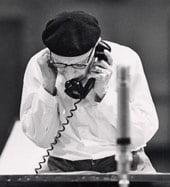
Last full year of conducting tours, which he is advised by his doctor to give up. Premiere of Requiem Canticles under Craft (Princeton).
for contralto and bass soli, chorus and orchestra BH
Conducts for the last time (Toronto). Is twice hospitalised, with bleeding ulcers and a thrombosis.
Arranges Two Sacred Songs of Hugo Wolf. Flies to Zürich and receives from his eldest son the manuscript full score of The Rite of Spring, presented to him by Boosey and Hawkes on his 80th birthday.
(Wolf) transcribed for mezzo-soprano and ten instruments BH
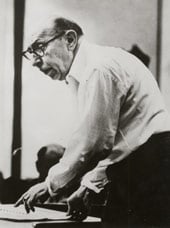
Arranges Bach Preludes and Fugues. Moves from Hollywood to New York.
Two Preludes and Fugues (from the ‘48) (Bach) transcribed for strings and woodwind ms
In a state of extreme physical decline, flies to Europe and settles for the summer at Evian (on the French shore of Lake Geneva), where he is visited by members of his family and photographed by Lord Snowdon.
Dies in New York (6 April). After a funeral service in New York, his body is transported to Venice and buried there on the island of San Michele.
Publishers
BH=Boosey & Hawkes;
BH*=Boosey & Hawkes for the USA only;
BH**=Boosey & Hawkes for the USA and Canada only; Bel=Belaiev;Br=Breitkopf & Härtel; Ch=Chester Music; FM=Faber Music; FF=Faber & Faber; For=Robert Forberg; Han=Wilhelm Hansen; Jur=Jurgenson; Ma=Edward B Marks; Mer=Mercury Music; Mor=Edwin H Morris; Sch=Schott; ms=manuscript