






Sergei Rachmaninoff Timeline
A year by year alignment of Rachmaninoff's life and works
Biographical information by Geoffrey Norris
The chronological list of works indicates the publisher of each work and provides links for further information on those published by Boosey & Hawkes
Sergei Vasilyevich Rachmaninoff, born at Oneg, near Novgorod, 20 March (1 April, new calendar style)
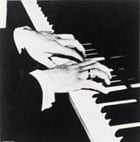
Begins studies at St Petersburg Conservatory, remaining there until 1885
Moves to Moscow, where he starts piano lessons with Nikolay Zverev
Piece (Canon) for piano solo (1884 or 1891?)
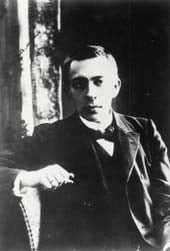
Begins composing first piano pieces: 3 Nocturnes, a Romance, Prelude, Melodie and Gavotte
Study in F# for piano solo (1886?)
Songs without Words for piano solo (1887?)
4 Pieces for piano solo
Romance for violin and piano (1880s)
Scherzo in D minor for orchestra
3 Nocturnes for piano solo (1887-88)
Enters Alexander Ziloti’s piano class at the Moscow Conservatory. Also studies counterpoint with Sergey Taneyev and harmony with Anton Arensky
First Quartet for string quartet (unfinished) (1889-90)
Starts writing Piano Concerto No.1 and begins work on the 6 Songs published as op.4
for voice and piano Op.4 (1890-93) BH
Lied (Romance) for cello & piano
Again you leapt, my heart Song for high voice and piano (1890?)
Melody on a theme by S Rachmaninoff for cello or violin and piano
Deus Meus for unaccompanied mixed chorus
2 songs for bass voice and piano
Composes the two-piano Rhapsodie russe. Graduates from piano section of the Moscow Conservatory. Completes Piano Concerto No.1 and the tone poem Prince Rostislav
Rhapsodie russe for two pianos
Prince Rostislav Symphonic poem for large orchestra
2 Pieces for piano six hands (1890-91)
Manfred Symphonic poem for orchestra (1890-91)
Two Monologues from Pushkin’s ‘Boris Godunov’ Recitatives for bass voice and piano (1891?)
Arbenin’s Monologue from Lermontov’s ‘Masquerade’ Recitative for bass voice and piano (1891?)
2 Songs for high voice and piano
Prelude in F for piano solo
Russian Boatmen’s Song (before 1892)
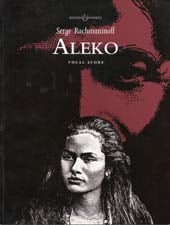
In Moscow gives premiere of Piano Concerto No.1 (first movement), composes Trio élégiaque in G minor and Prelude in C# minor. Graduates in composition, gaining the highest possible mark, 5+, for the opera Aleko, and wins the conservatory’s Great Gold Medal
for piano, violin and cello
At the Bolshoy Theatre, Aleko has its premiere and is warmly praised by Tchaikovsky. Rachmaninoff composes the orchestral fantasy The Rock, the 6 Songs Op.8, and Trio élégiaque in D minor, prompted by Tchaikovsky’s death
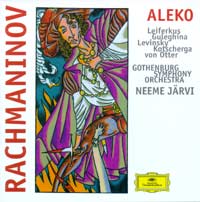
The Rock Fantasy for Orchestra
O Mother of God, vigilantly praying Sacred Concerto (Motet) for unaccompanied chorus
3 Songs for voice and piano
Completes Morceaux de salon op.10 for piano, Six Morceaux op.11 and the orchestral Caprice bohémien
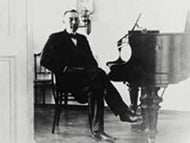
for piano solo (1893-94) BH
Chorus of Spirits for unaccompanied mixed chorus
Song of the Nightingale for mixed chorus and piano
Two episodes à la Liszt after Byron’s ‘Don Juan’ for orchestra
Romance for piano duet (1894?)
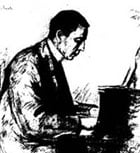
Starts composing Symphony No.1, Moments musicaux op.16 for piano and the 12 Songs op.14
6 Moments musicaux for piano (1896)
6 Choruses (1895-96)
Second Quartet for string quartet (unfinished) (1896 or 1913)
Symphony No.1 has a disastrous premiere in St Petersburg, conducted by Glazunov. Rachmaninoff accepts a post as conductor of the Moscow Private Russian Opera Company
Makes his international concert debut at Queen’s Hall in London, conducting The Rock and playing the Elégie and Prelude in C# minor from Op.3
2 Pieces for piano solo
Were you hiccupping Song for bass voice and piano
Two Russian Songs for voice and piano (No.2 lost)
Begins work on Piano Concerto No.2 and the two-piano Suite No.2. In Moscow gives premiere of the concerto’s second and third movements
Night Song for medium voice and piano
Completes Suite No.2 and Piano Concerto No.2, performing the complete concerto in Moscow in the autumn. Composes Cello Sonata
for 2 pianos (1900-01) BH
Marries his cousin, Natalya Satina; composes the cantata Spring and 12 Songs op.21
Cantata for baritone solo, chorus and orchestra BH
The Rachmaninoffs’ first daughter, Irina, is born Composes Chopin Variations and completes 10 Preludes op.23
for piano (1902-03) BH
Signs contract to conduct opera at the Bolshoy Theatre
Opera in two scenes, with epilogue and prologue (1904-05) BH
His appointment at the Bolshoy urges him to finish two operas on which he had recently been working: Francesca da Rimini and The Miserly Knight. Conducts the premieres at the Bolshoy. Since his youth, Rachmaninoff had spent many summers at the Satins’ country estate at Ivanovka. This summer he finishes there the 15 Songs op.26. In the autumn the family decides to spend some time in Dresden, to free the composer from the pressures of Moscow. Begins work on Symphony No.2 in Dresden.
for piano duet (1906?) Version for solo piano (Ziloti) BH
Monna Vanna (unfinished opera)
Conducts premiere of Symphony No.2 in St Petersburg
for bass voice and piano BH
In Dresden completes the symphonic poem The Isle of the Dead; at Ivanovka writes Piano Concerto No.3, in time to give its premiere during his first American tour in the autumn
Symphonic poem for orchestra BH
Back in Russia he writes the choral Liturgy of St John Chrysostom and the 13 Preludes op.32
for chorus a capella BH
Takes charge of the estate at Ivanovka, and there composes the Études-tableaux op.33
for piano BH
In Rome starts work on the choral symphony The Bells, which, together with Piano Sonata No.2, he completes at Ivanovka
for soprano, tenor, and bass soloists, chorus and orchestra BH
From the Gospel of St John for bass voice and piano (1914-15?)
Composes 6 Songs op.38 and some of the Études-tableaux op.39 (completed 1917)
for voice and piano BH
Two Sacred Songs for high voice and piano
Anxious to leave Russia after the October Revolution, he accepts an invitation to give concerts in Stockholm. Revises Piano Concerto No.1. Leaves Russia at the end of December, never to return
Three Pieces for piano solo
From Stockholm the family moves to Copenhagen. In November they sail to America
Rachmaninoff begins a new full-time career as a concert pianist, undertaking extensive tours every season from now on
arranged for voice and orchestra BH
Signs his first recording contract with the Victor Talking Machine Co. (later RCA)
Makes his first recording of Piano Concerto No.2
He establishes the Tair publishing house in Paris, the name deriving from his two daughters, Tatyana and Irina. Tair publishes several of his own works
Completes Piano Concerto No.4 and the Trois Chansons Russes op.41
(1913-26) BH
Piano Concerto No.4 is unenthusiastically received when Rachmaninoff plays it in March. He withdraws it from the repertory
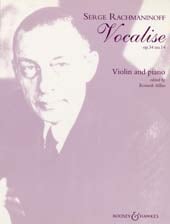
With the Philadelphia Orchestra records The Isle of the Dead, his orchestral arrangement of the Vocalise, and makes his second recording of Piano Concerto No.2
Respighi orchestrates some of the Études-tableaux. The Rachmaninoffs decide to build a villa, Senar, on the shores of Lake Lucerne in Switzerland
The family moves in to the now completed Villa Senar. Composes Rhapsody on a Theme of Paganini, performing and recording it with the Philadelphia Orchestra
for piano and orchestra BH
Completes Symphony No.3 (which he revises in 1938), and creates an alternative simplified version of the choral parts for the Presto movement of The Bells for the Sheffield Festival
Plays Piano Concerto No.2 in the concert for Sir Henry Wood’s jubilee, 5 October
Gives final concerts in England. Has a fall at Senar, and is prevented from attending the Covent Garden premiere of a ballet based on the Rhapsody on a Theme of Paganini. In the USA he records Symphony No.3 and Piano Concertos Nos.1 and 3, with the Philadelphia Orchestra
Revises Piano Concerto No.4, and records it
Gives final concert at Knoxville, Tennessee, on 17 February. Seriously ill, returns to Los Angeles, going first to hospital and then back home to Beverly Hills. He dies there on 28 March. His body is taken back to New York, and buried in Kensico Cemetery
Publishers
BH = Boosey & Hawkes