





OPERA SEARCH

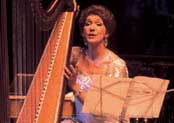
Capriccio
(1940-41)Libretto by Clemens Krauss (G,E,F,I)
Major roles: dramS,dramA,heldT,2Bar,B;
minor roles: S,2T,B; chorus: 4T,4B
3(III=picc).2.corA.3.bhn.bcl.3(III=dbn)-4.2.3.0-timp.perc:cyms/BD-
hpd-2harp-strings(16.16.10.10.6)
On-stage: vln.vlc-hpd; backstage: string sextet
Abbreviations (PDF)
Boosey & Hawkes
Nationaltheater, Munich
Conductor: Clemens Krauss
Company: Bavarian State Opera
| COUNTESS | Soprano |
| COUNT | Baritone |
| FLAMAND, a musician | Tenor |
| OLIVIER, a poet | Baritone |
| LA ROCHE, director of a theatre | Bass |
| CLAIRON, an actress | Contralto |
| M. TAUPE | Tenor |
| ITALIAN SINGER | Soprano |
| ITALIAN TENOR | Tenor |
| MAJOR-DOMO | Bass |
| 8 servants | 4 Tenor, 4 Bass |
| Young Dancer | Dancer |
A Château near Paris, about 1775
In the Countess Madeleine’s château, the composer Flamand and the poet Olivier listen to a rehearsal of Flamand’s newly written sextet. They are both in love with the Countess, and argue the relative merits of music and words. The theatre director La Roche, waking up from a nap, explains that without impresarios their efforts are but lifeless paper. They leave to rehearse Olivier’s new play, written for the Countess’s birthday the following day. The Count enters, teasing the Countess that she is identifying Flamand with her love of music, while she retaliates that his love of words mirrors his admiration for the actress Clairon. While the Count enjoys fleeting encounters, the Countess desires long-lasting love but cannot choose between Flamand and Olivier. Clairon arrives and she and the Count read the latest scene, culminating in a love sonnet, before leaving for the rehearsal in the theatre. Olivier declares to the Countess that the sonnet is intended for her but, to his horror, Flamand sets it to music and sings it. Olivier is summoned to make cuts to his play. Flamand declares his love and the Countess asks him to meet her in the library the following morning when her choice will be revealed. Refreshments are served while the guests are entertained by dancers and singers. La Roche describes his planned birthday entertainment, the allegorical Birth of Pallas Athene followed by the spectacular Fall of Carthage. He is mocked, but defends his faith in the theatre, challenging Flamand and Olivier to create masterpieces that speak to humanity’s heart and soul. The Countess commissions them to collaborate on an opera, and the Count suggests the theme should be the events of that afternoon. The Count and Clairon leave for Paris with the theatre company. With moonlight streaming in through the windows, the Countess learns that Olivier as well as Flamand will meet her in the library to learn how the opera is to end. Torn between them, she sings the sonnet that represents their inseparability. She consults her image in the mirror to decide the opera’s ending. The major-domo provides the answer: ‘Dinner is served’.
Comic, Romantic

Gundula Janowitz/Dietrich Fischer-Dieskau/Peter Schreier/Hermann Prey/Karl Ridderbusch/Tatiana Troyanos/Bavarian Radio Symphony Orchestra and Chorus/Karl Böhm
Deutsche Grammophon 445 3472