




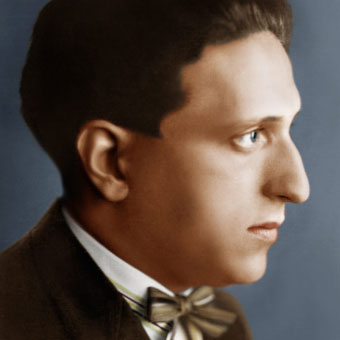
Pavel Haas
Haas studierte an der Musikschule der Philharmonischen Gesellschaft seiner Geburtsstadt Brno (Brünn) und nach dem Ersten Weltkrieg am Staatlichen Konservatorium, wo er Meisterschüler Leos Janáceks wurde * der Unterricht Janáceks und die Begeisterung für die neu gegründete Tschechische Republik bewirkten seine Wendung weg von der deutschen Romantik als der damaligen Hauptströmung, hin zu regionalen Volksmusiktraditionen * frühe Erfolge umfaßten den Liederzyklus Fata Morgana auf Texte von Tagore, die und Nr.2 und das Bläserquintett * erlangte stilistische Reife in den 1930er Jahren mit der tragikomischen Oper Scharlatan und dem Steichquartett Nr.3 * Haas’ Musiksprache verbindet böhmische Einflüsse, jüdische Volksweisen, Synagogalgesang, Jazzelemente und polymetrische Strukturen * seine eigentliche kompositorische Tätigkeit wurde häufig durch Auftragsarbeiten für Theater- und Filmproduktionen unterbrochen * zu den Werken seiner letzten Jahre in Freiheit zählt eine unvollendete, posthum komplettierte Symphonie * in schlechter gesundheitlicher Verfassung 1941 von den Nazis nach Theresienstadt deportiert, doch von Gideon Klein zur Fortsetzung seiner kompositorischen Tätigkeit ermutigt * die in Theresienstadt entstandenen Werken umfassen die im Lager unter der musikalischen Leitung von Karel Ancerl uraufgeführte Studie für Streichorchester und Vier Lieder nach chinesischer Poesie * Pavel Haas wurde in Auschwitz ermordet
zu Pavel Haas’ Werken zählen:
Streichquartette Nr.1 (1920), Nr.2 (1922) und Nr.3 (1938)
Scharlatan (1934-37) Tragikomische Oper in drei Akten
Symphonie (unvollendet) (1940-41) Orchestrierung komplettiert von Zdenek Zouhar
Vier Lieder nach chinesischer Poesie (1944) für Bariton und Klavier
"Unser Wille, Kunst zu schaffen, ist immer so stark gewesen wie unser Wille zu überleben." — Pavel Haas, Theresienstadt