






Magnus Lindberg: interview about new double piano concerto
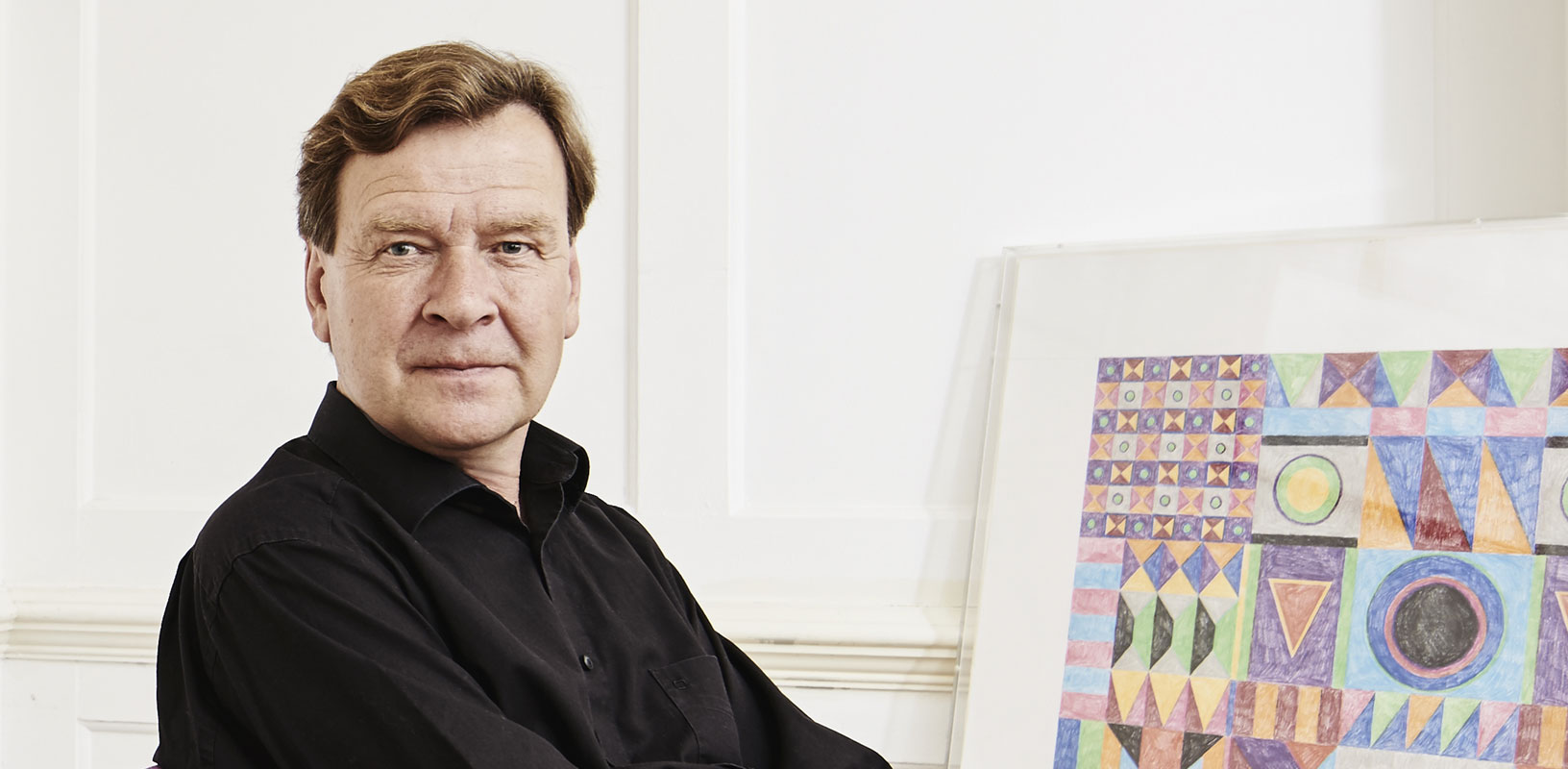
The Jussen brothers are soloists in the new Concerto for Two Pianos and Orchestras by Magnus Lindberg, performed around Europe this season. Following the premiere in Bergen on 10 December, the concerto travels to Amsterdam, Cologne, Helsinki and Prague.
Magnus Lindberg’s latest concerto, featuring the Jussen brothers as twin piano soloists, is premiered by the Bergen Philharmonic under the baton of fellow-Finn Jukka-Pekka Saraste on 10 December. In this interview the composer introduces the new concerto and explains his special relationship with the piano:
With three piano concertos already in your catalogue, what prompted a double piano concerto?
I’ve loved writing for the piano across my career – going back 50 years my very first piece was Music for 2 pianos followed a few years later by Play 1, also for two pianos. Alongside my dear friend and fellow student Esa-Pekka Salonen we were very lucky to have had a theory teacher, Risto Väisänen, who was also an excellent pianist. Risto and myself assisted as pianists in Jorma Panula’s conducting classes and I played through the entire repertoire for two pianos - everything from Bach to Stockhausen. So, when the Jussen brothers kindly asked for a concerto, there was no hesitation - this was a project in waiting for more than 40 years!
Are there any particular models of other double piano concertos you admire?
Growing up with the two piano concerto repertoire, including Bach, Mozart, Mendelssohn and Poulenc, meant those works were very familiar to me. My early music was decidedly post-serial and had much in common with Boulez (we played his Structures) and also with Bernd Alois Zimmermann. However, an absolute ‘turning point’ for my stylistic development came with the Concerto for Two Pianos and Orchestra by Luciano Berio. It opened up a different ‘freedom’, more defined by vivid textures than the rigid structural approach with which I had started. Still today I owe a lot to Berio, whose music I still sincerely admire and adore!
Does it make a compositional difference that the piano is your own instrument?
Yes, indeed! The classical canon of repertoire for the piano is something I grew up with, so I have never had any intention to reinvent the wheel, so-to-speak, and don’t have many questions about ‘playability’. The beauty of such a versatile instrument remains a source of inspiration and having two grand pianos on the stage is an unbeatable prospect.
Do the two piano parts work together or as two separate characters?
Paradoxically, the big model for this concerto was the Ravel left hand concerto! It remains one of my absolute favourite works - the way he managed to work within a constrained framework for one hand was a parallel challenge to me writing at the opposite end of the scale for two pianos and four hands. Sometimes I treat the two pianos as a single large instrument, sometimes as two instruments, and often as dialoguing partners with the orchestra.
The work plays continuously – how is it structured internally?
My Piano Concerto No.3 turned out to be a huge concerto - it was almost like three concertos in one, whereas the new double concerto has a much more compact approach to material. In a way I feel it functions like a Rondo. The returning material is the same throughout yet, hopefully, the work opens up different views of the recurring musical motives and keeps the recognisable similarities contrasted with new textures and sonorities.
How does the orchestral part interact with the soloists in terms of material and textures?
For me the concerto as a genre has always been about the endless dialogue between the soloist(s) and the orchestra. In the 1960s and ’70s many composers felt ‘uneasy’ about the inherent hierarchy of the soloist-crowd constellation. I never felt that way because, when studying with Vinko Globokar in the early ‘80s, I had read Elias Canetti’s book Crowds and Power, which examined how individuals form collectives to effect change. This fed directly into my own compositions in the early eighties, such as Action – Situation – Signification, written for the Toimii ensemble, and has influenced my approach to writing concertos ever since. I’m continually fascinated by the setup of having a ‘red line’ spinning in the middle of a texture - generating possibilities for virtuosity and dialogue.
Interviewed by David Allenby, 2026
Magnus Lindberg
Concerto for Two Pianos and Orchestra (2026) 25’
2.2.2.bcl.2(II=dbn)-2.2.2.1-timp-strings
All performances with Lucas & Arthur Jussen, pianos
10 December 2026 (world premiere)
Grieghallen, Bergen
Bergen Philharmonic Orchestra / Jukka-Pekka Saraste
20 February 2027 (Dutch premiere)
Concertgebouw, Amsterdam (NTR ZaterdagMatinee)
Netherlands Radio Philharmonic / James Gaffigan
16 April 2027 (German premiere)
Philharmonie, Cologne
WDR Symphony Orchestra / Marie Jacquot
12/13 May 2027 (Finnish premiere)
Music Centre, Helsinki
Finnish Radio Symphony Orchestra / Nicholas Collon
9/10 June 2027 (Czech premiere)
Municipal House, Smetana Hall, Prague
Prague Symphony Orchestra / Tomáš Netopil
Magnus Lindberg is currently completing a new large-scale orchestral work for Klaus Mäkäla to conduct first performances with the Royal Concertgebouw Orchestra in Amsterdam (7 May) and the Chicago Symphony Orchestra (13 May). Lindberg’s 70th birthday is celebrated in 2028.
> Further information on Work: Concerto for Two Pianos and Orchestra
Photo: Philip Gatward